

When tutoring isn’t enough, it’s worth asking what the tutor can’t see.
If your child has had extra help and the scores still aren’t moving, the problem may not be effort or instruction. It may be how their eyes handle the page. That’s what we test for.




We don’t do routine eye exams. Our practice is built around vision therapy.
Many optometrists offer vision therapy as a small part of a general practice. At OCVT, it’s the center of what we do, so the children we see are often the ones who have already tried other things.
Our founder, Dr. Briana Larson, completed residency training in vision therapy with a focus on children. Fewer than 1% of optometrists have that training. She also coordinates the residency program at UIW Rosenberg School of Optometry, where she helps train the next generation of doctors in this work.
Her team of doctors and certified vision therapists works with families at all three of our offices.
- 2010Fellow, College of Optometrists in Vision DevelopmentBoard certified in vision development and therapy. Dr. Larson
- 2012Fellow, American Academy of OptometryDr. Larson
- 2013Mollie Armstrong Leadership AwardTexas Optometric Association. Dr. Larson
- 2014Fellow, Neuro-Optometric Rehabilitation AssociationDr. Larson
- 2015Best Vision Therapy PracticeThe Austin Chronicle
- 2020Optometric Staff Member of the YearTexas Optometric Association. Ashley Coley








OD: Doctor of Optometry. COVT: Certified Optometric Vision Therapist.
You’ve tried tutoring. You’ve tried extra time. The scores still aren’t moving.
Your child works with a tutor twice a week. You help with homework every night. The teacher says they’re trying hard. But the test scores look the same as they did six months ago, and you’re running out of explanations.
Sometimes the missing piece isn’t instruction. It’s how a child’s eyes handle the page. And a standard eye exam isn’t built to catch it.
- Tutoring hasn’t moved the needle on reading or grades
- Homework takes much longer than it should
- Can read a passage aloud but can’t recall what it said
- Test scores don’t reflect what they seem to know
- Avoids reading or gets tired quickly while reading
- Has passed an eye exam but still struggles in school
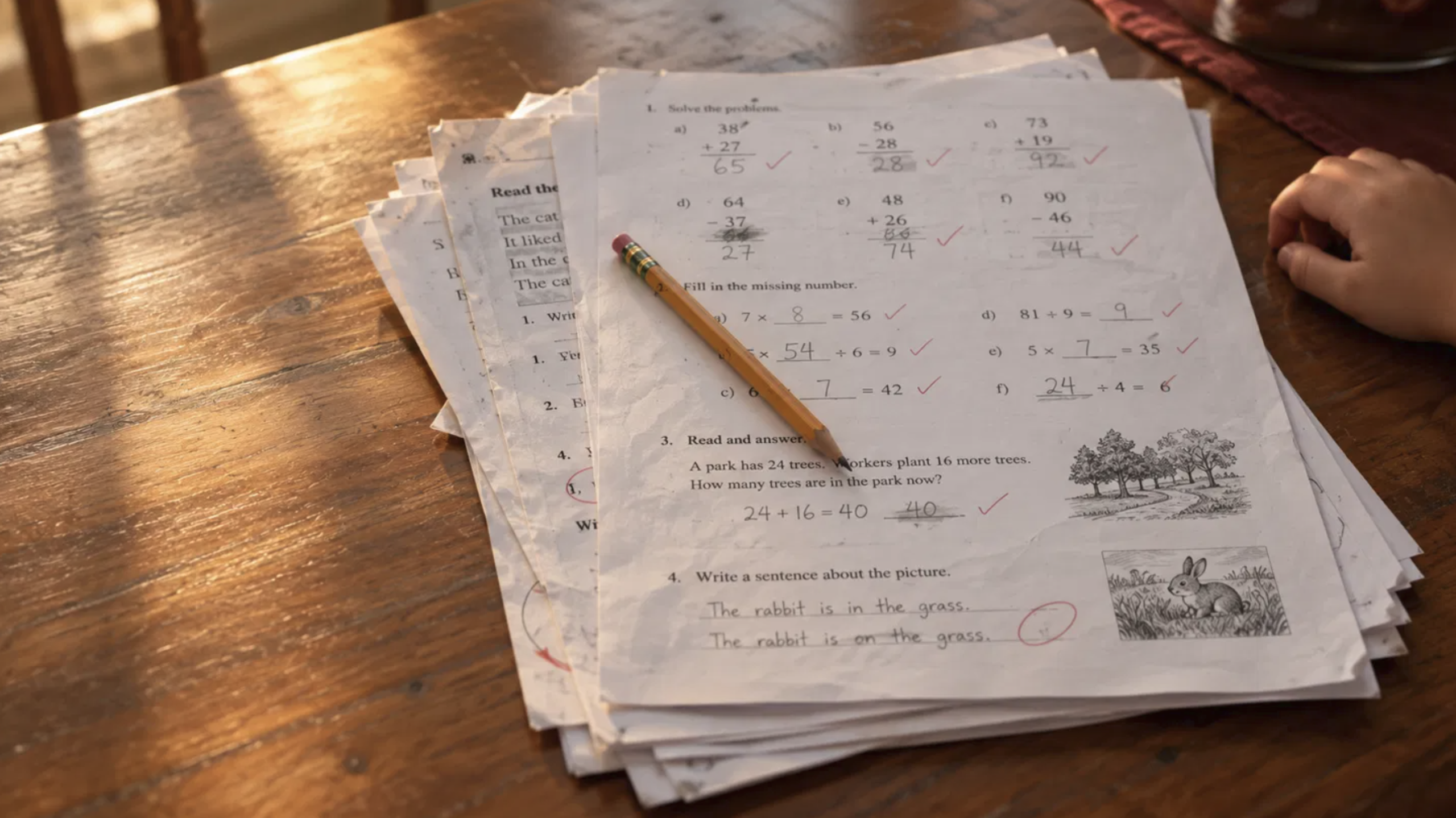
A tutor teaches the skill. But the eyes have to be ready to use it.
Reading requires both eyes to aim at the same word, track smoothly across the line, and hold focus for as long as the assignment lasts. When those visual skills aren’t working together, even the best instruction can’t fully land.
Vision therapy is not a replacement for tutoring. It addresses the visual problems that can prevent tutoring from working the way it should.
From first call to a clear answer
-
A no cost consultation
You’ll talk with our team about what you’ve tried, what’s not working, and whether a vision evaluation makes sense for your child.
-
A full evaluation, if it’s a good fit
We test the visual skills that school screenings and standard eye exams don’t cover: tracking, teaming, and focusing.
-
A program built for your child
If we find a vision problem, we’ll create a therapy plan in our office or from home. OCVT has offered virtual vision therapy for more than 13 years.
From parents who tried everything else first
What a few OCVT parents have shared about the change they saw.
Before OCVT, Brady hated reading, a constant battle to read a simple passage… Reading is no longer a chore, the difference in our son is life changing.
Her reading improved at a remarkable rate, in a 6-week span she went from reading at 2 levels below grade level to reading at grade level.
She has improved 100%, back to being an avid reader, she reads all the time.
Questions parents usually ask us
“Should we stop tutoring?”
No need to stop anything. We recommend that children already working with a tutor, an IEP, or other support also have a vision-related learning evaluation. That way, you’ll know whether vision is part of the picture.
“Our eye doctor said my child’s vision is fine.”
That’s very common, and it’s often true for eyesight. A standard eye exam mainly checks how clearly your child sees. A vision therapy evaluation looks at how the eyes work together while reading. A child can have both clear eyesight and a vision problem that makes learning hard.
“Is it a learning disability or a vision problem?”
From the outside, the two can look a lot alike, and some children have both. An evaluation focuses on the visual side, so you’ll have a clearer picture of what’s going on.
“Does vision therapy cure dyslexia?”
No. Vision therapy treats visual problems that can make learning harder. It works alongside the other support your child may already be getting.
“Do you take insurance?”
OCVT is out of network with insurance plans, and most plans don’t cover vision therapy directly. If you’d like to submit for reimbursement, we’re glad to provide the documentation your insurance company asks for. Our team can talk you through it during your consultation.
“Can we do this from home?”
Yes. OCVT has offered virtual vision therapy for more than 13 years, for families across most of the country.
If extra help hasn’t been enough, let’s find out whether vision is the missing piece.
Start with a no cost consultation at the office nearest you.
Austin, TX 78746
Request a Consultation
Please use this form for general information purposes only. DO NOT send personal health information through this form. Specific patient care must be addressed during your appointment.