
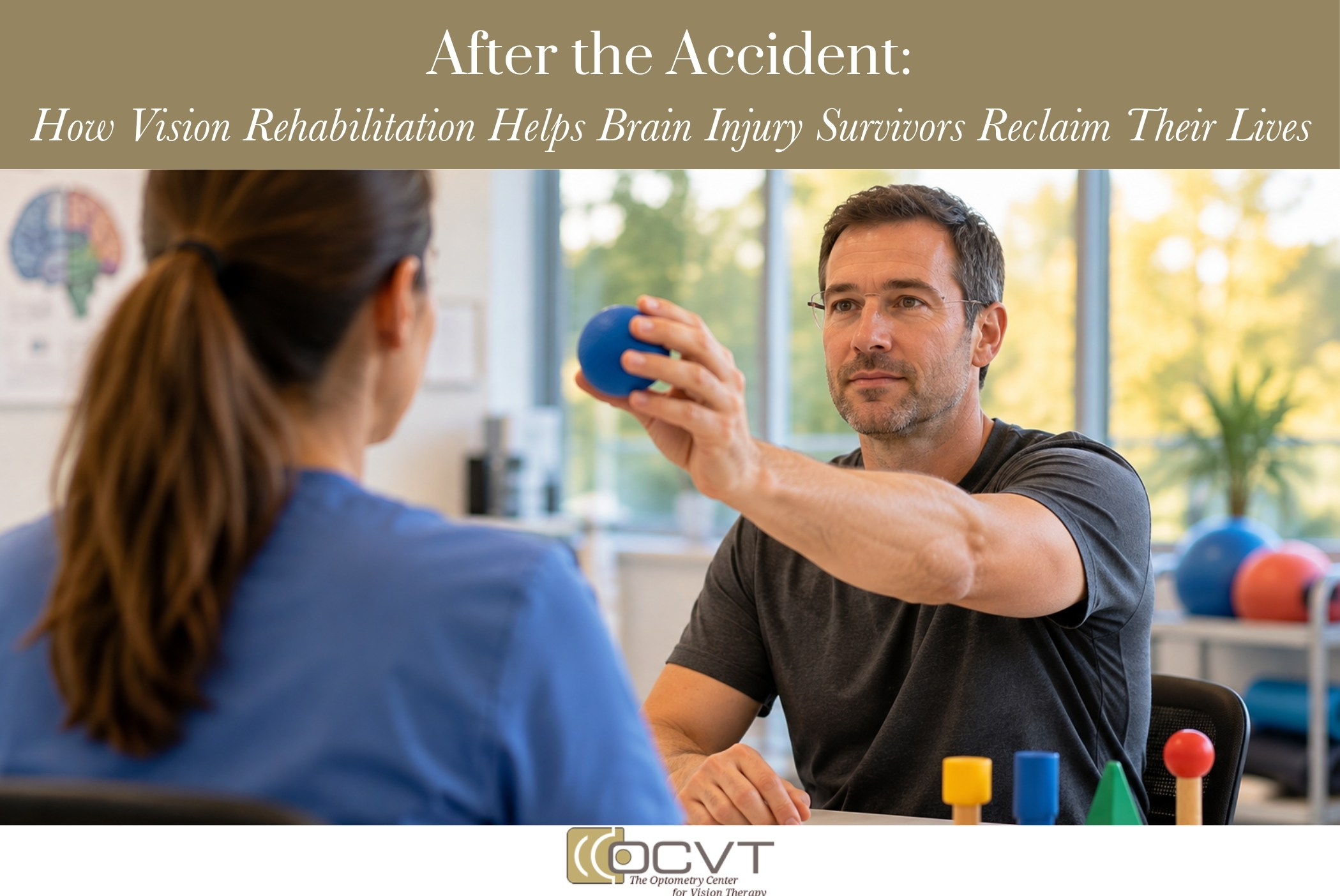
A car accident. A sports concussion. A fall. A stroke. The brain injury itself may heal, but for many survivors, invisible symptoms linger for months or years — symptoms like dizziness, chronic headaches, difficulty reading, light sensitivity, and a persistent feeling that something is “off.” What many people don’t realize is that a large percentage of these lingering symptoms are rooted in the visual system, and that specialized neuro-optometric rehabilitation can make a profound difference.
Why the Visual System Is So Vulnerable After Brain Injury
Vision is not just about the eyes. It’s a complex neurological process — roughly one-third of the brain is devoted to visual processing. This means that any injury affecting the brain has the potential to disrupt the visual system, even if the eyes themselves are structurally undamaged.
After a traumatic brain injury (TBI) or concussion, the neural pathways that govern eye movement, coordination, focusing, and visual processing can be damaged or destabilized. The eyes may no longer work together seamlessly. The brain may struggle to integrate what each eye sees into a clear, single image. Processing speed slows. Light sensitivity spikes. The result is a cascade of symptoms that can make everyday activities — reading, driving, working on a screen, navigating a grocery store — feel overwhelming.
Common Post-Injury Visual Symptoms
The visual symptoms that follow brain injury are wide-ranging and often misunderstood. Patients and their neurologists may attribute them to the injury’s general effects without recognizing that specific visual dysfunction is driving much of the suffering. Symptoms to watch for include:
- Double vision or blurred vision
- Difficulty reading — losing place, slow reading speed, comprehension problems
- Headaches or eye strain during visual tasks
- Light sensitivity (photophobia)
- Dizziness, balance problems, or motion sensitivity
- Difficulty with depth perception
- Trouble tracking moving objects
- Anxiety in visually complex environments (crowds, busy patterns, driving)
These aren’t just inconveniences. They affect employment, independence, relationships, and quality of life. Yet they are frequently under-addressed in standard post-injury care.
The Role of a Neuro-Optometrist
A neuro-optometrist specializes in the relationship between the visual system and the brain. Unlike a standard eye exam, a neuro-optometric evaluation examines how well the visual system is functioning as an integrated neurological system — not just whether vision is clear.
At OCVT, our neuro-optometric services are specifically designed for patients recovering from brain injuries, strokes, and concussions. We assess binocular vision, eye movement control, visual processing, and other functions that are commonly disrupted after neurological events. When deficits are found, we develop a personalized rehabilitation program.
Vision Rehabilitation: A Path Forward
Neuro-optometric rehabilitation at OCVT combines therapeutic lenses, prisms, and structured vision therapy activities to retrain the visual system. Treatment is progressive and individualized — designed around each patient’s specific deficits and functional goals.
Patients often begin to notice improvements in balance, reading endurance, headache frequency, and overall comfort with visual tasks. Many describe the experience as finally getting to the root of what has been holding back their recovery.
OCVT also offers a Brain Injury Support Group, bringing together survivors and families in a community setting that acknowledges the complexity of recovery and the importance of comprehensive care.
If you or someone you love is dealing with lingering symptoms after a brain injury, concussion, or stroke — and if visual symptoms are part of that picture — a neuro-optometric evaluation at OCVT may be an important next step. We serve patients across Austin, San Antonio, and beyond, including via virtual consultation for those who are unable to travel.
